




Insights · Trauma
How long a
fracture really
takes to heal
Bone heals on its own timetable. What treatment changes is the position it heals in, and how much movement you keep while it does.
Plaster and plates do not heal bone. They hold it still enough, and in the right position, while the body heals it.
Reviewed by Dr. Nisarg Trivedi, M.S. Orthopaedics · Vishwas Orthopaedic Hospital, Bharuch
Key points
- Most adult fractures unite in six to twelve weeks, with wide variation by bone
- Children heal faster; older adults and smokers heal more slowly
- Surgery is chosen for position and early movement, not for speed of union
- Union on X-ray and full recovery of function are different milestones
- Smoking, poorly controlled diabetes and low vitamin D delay healing
The first question after a fracture is almost always the same. How long? The honest answer has two parts, because the bone joining together and the limb working normally again are not the same event, and they rarely happen at the same time.
Bone healing is biology, and biology has a pace. What treatment controls is alignment, stability and how early movement can safely begin, all of which strongly influence the final function.
Typicaltimelines.
Approximate union times in adults
- Finger and toe bones: around three to four weeks
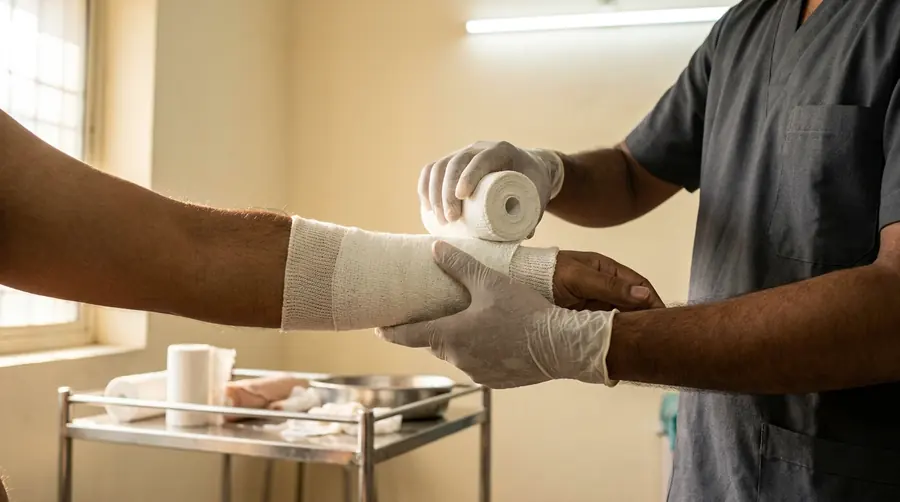
- Wrist, including the distal radius: around six weeks in plaster
- Collarbone: around six to eight weeks
- Forearm and ankle: around six to twelve weeks
- Thigh bone and tibia: around twelve to sixteen weeks, sometimes longer
- Hip fractures in older adults: surgery is usually advised early so that walking can resume within days
Children commonly heal in half these times. Adults over sixty, smokers, and people with diabetes or poor nutrition often take longer.
Union is not the same as recovery
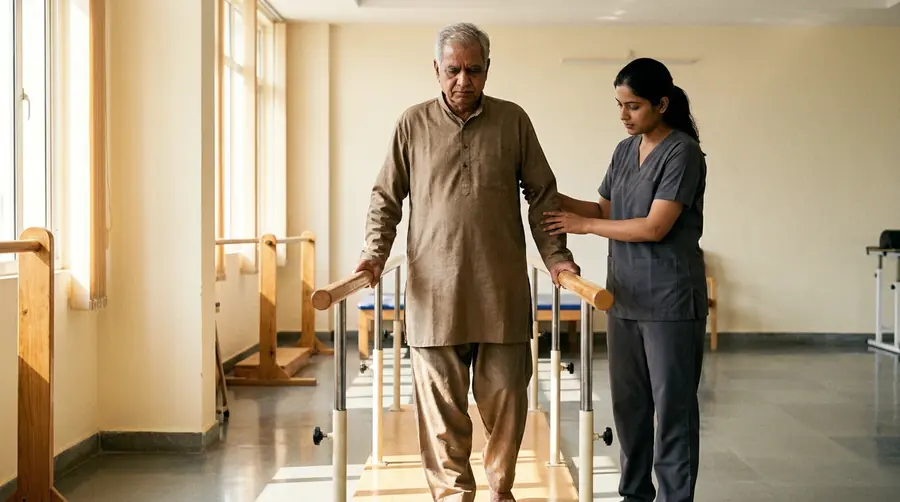
A wrist may be united at six weeks and still be stiff, weak and swollen for another two to three months. Stiffness after immobilisation is normal and treatable, which is why rehabilitation begins as soon as the fracture allows rather than after it has fully healed.
Plaster or surgery
Plaster is entirely appropriate for fractures in acceptable position that will stay there. Surgery is preferred when the fracture cannot be held in a good position, when the joint surface is involved, when the bone is displaced or unstable, or when early movement of a joint is essential to a good result. The decision is about position and function rather than seriousness.
Helping boneheal.
What genuinely helps
- Following weight-bearing instructions exactly; both too much and too little can be harmful
- Moving every joint that is not immobilised, every day
- Adequate protein, calcium and vitamin D, which are commonly deficient
- Elevation and finger or toe movement in the first week to control swelling
- Attending review appointments so that alignment can be checked while it is still correctable
What delays healing
- Smoking and tobacco use, which measurably reduce union rates
- Poorly controlled blood sugar
- Removing a cast or splint early, or walking on a limb before permitted
- Untreated vitamin D deficiency and inadequate nutrition
When to come back sooner
- Increasing pain, numbness, or fingers and toes that look pale or blue
- A cast that becomes loose, wet, cracked or unbearably tight
- Wound discharge or fever after surgery
- New deformity, or a fresh injury to the same limb
Healing times above are broad averages for orientation only. Your own fracture, X-rays and health determine your timeline.
Frequentquestions.
Can a fracture heal without a cast?
Some can. Stable fractures of the collarbone, certain finger fractures and some foot fractures are treated with a sling, splint or protected weight-bearing rather than a full cast.
Does surgery make a fracture heal faster?
Not usually. Surgery holds the bone in a better position and often allows earlier movement, which improves the final function, but the biology of union still takes its own time.
Will calcium tablets speed up healing?
Calcium and vitamin D support normal healing and are corrected when deficient, but taking more than required does not accelerate union.
Why is my limb still stiff after the cast is removed?
Joints stiffen and muscles weaken during immobilisation. This is expected and usually recovers over several weeks to a few months with a structured rehabilitation programme.
Related care
Recent injury or a cast in place?
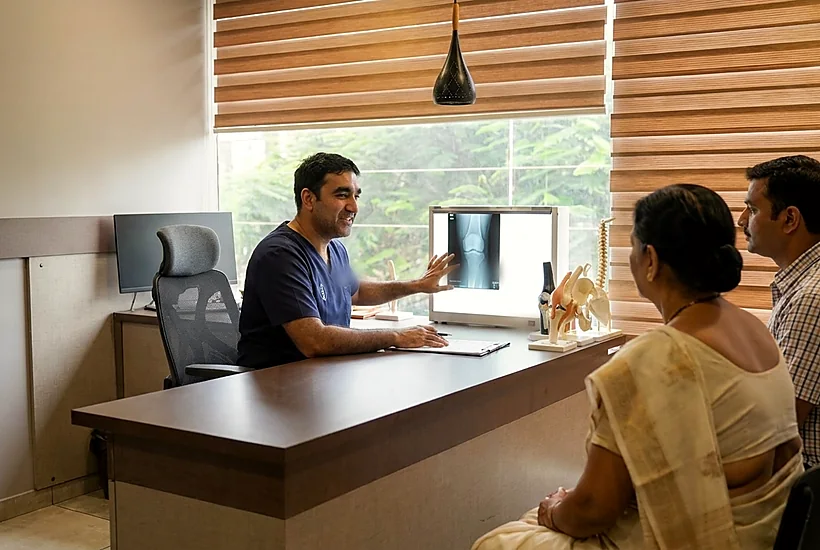
Fractures are easiest to correct in the first two weeks. A review with fresh X-rays confirms that healing is on track.